
You have to think of and understand the Internet’s Domain Name Service -DNS- as a System.
The DNS is the system which, in its primary function, converts Internet domain names that you type into URL bars, or hyperlinks that you click on a web page into numeric IPv4 and/or IPv6 addresses. In a sense, the DNS system is the phone book of the Internet (for those who don’t know, a phone book was a list of numbers and names). You can imagine this database looks something like this:
| IP Address | URL/Name |
| 165.227.86.21 | cellstream.com |
| 2604:a880:400:d0::850:9001 | cellstream.com |
| 138.197.71.240 | netscionline.com |
| 2604:a880:800:a1::7e4:8001 | netscionline.com |
To understand how this works, let’s start with your computer – we will call it the client. You type in some URL into your web browser and hit <Enter>. Here is an example:

Your computer needs to translate the Fully Qualified Domain Name part into an IP address.
The first thing your system does is it looks at its local DNS Resolver Cache. If you have visited that same site in the last 24 hours, it will be there, and job done, we can set up a TCP connection to that server and then do an HTTP GET.
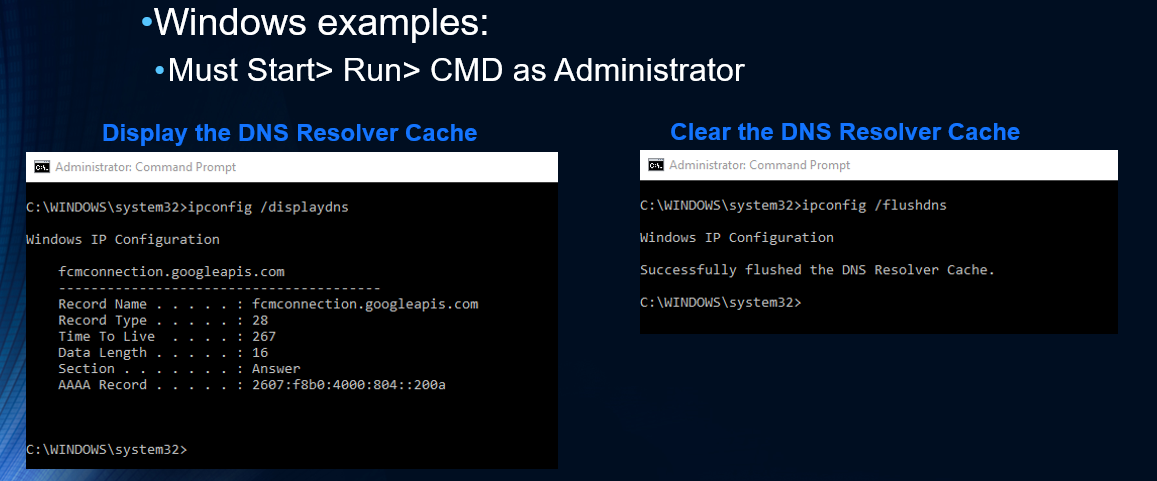
To display or clear the DNS resolver cache in Windows, see the examples below:
This is just a start, you will find the complete article and learning at our Patreon community. You will find the complete post here plus a Wireshark lab to practice this knowledge. Thank you to our patreons for your support.
Comments and technical discussion are always welcomed from registered users below, and you are also invited to continue the conversation with the community on our Discord server. If you would like to help support the continued development of independent networking, broadband, Wi-Fi, VoIP, and packet analysis content, please consider joining our Patreon community where you will gain access to exclusive technical resources, downloadable labs and PCAPs, bonus course content, troubleshooting guides, and additional member-only material. You can also support our work by simply buying us a coffee — every contribution helps us continue creating practical, real-world network science education for professionals and enthusiasts alike.